Unleash Dynamic Energy with Comic Retro Background
The Anatomy of a High-Impact Comic Retro Background
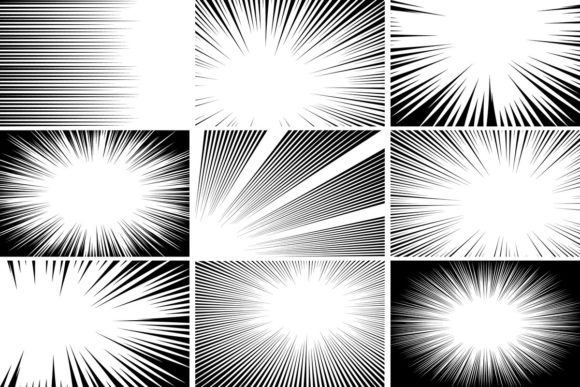
There is a visceral energy associated with the Comic Retro Background that static, minimalist designs often struggle to achieve. It is not merely a collection of shapes; it is a curated set of design assets built to simulate motion and intensity. When you look at this specific vector set, you are seeing the visual language of the Golden and Silver Ages of comics translated into modern, scalable formats. The core components—speed action lines, comic book stripe effects, and motion wave explosion elements—serve distinct psychological purposes. Speed lines force the viewer’s eye to move, creating a sense of velocity even on a static screen. Stripe effects add a layer of gritty texture that feels tactile and nostalgic, while the explosion elements act as focal points for impact.
This particular set, featuring an EPS10 file and a high-quality 72ppi JPEG preview, is designed for serious production work. The EPS10 format ensures that every vector line remains razor-sharp regardless of how much you scale it up. Whether you are working on a massive trade show banner or a small social media icon, the integrity of the Comic Retro Background holds. It is a premium font equivalent in the world of graphic elements—professional, versatile, and engineered for high-resolution output.
Transforming Brand Identity and Visual Hierarchy
In the realm of brand identity, color and typography are often discussed, but the background texture is the unsung hero that ties them together. Using a Comic Retro Background does more than fill empty space; it dictates the mood of the entire composition. For a brand aiming to appear energetic, youthful, or rebellious, these retro elements provide an instant shortcut to that perception. They inject personality into a logo design or a hero image on a website, signaling to the audience that this brand values creativity and dynamism.
Consider how this impacts visual hierarchy. In editorial design or packaging design, the background sets the stage. By incorporating these speed lines and motion waves, you create a sense of depth. The foreground elements—whether they are headlines set in a bold sans serif font or product images—pop against the chaotic backdrop. This contrast is crucial for readability. If you pair a busy, high-contrast background like this with a delicate script font, you might lose legibility. However, pairing it with a heavy, geometric serif font or a thick sans serif creates a cohesive, punchy aesthetic that commands attention.
For entrepreneurs and small business owners, consistency is key. Incorporating these retro elements into your social media graphics creates a recognizable "vibe" that followers can identify instantly. It turns a standard Instagram post into a piece of branded entertainment. The retro style also carries a sense of nostalgia, which is a powerful marketing tool. It connects with an older demographic who grew up reading comics while appealing to a younger audience that appreciates vintage aesthetics.
Practical Applications: From Web Design to Print
The versatility of this Comic Retro Background extends across almost every medium available to a modern creator. In web design, these vectors are perfect for "About Us" pages or landing pages that need to convey excitement without relying solely on video. The stripe effects can be used as subtle section dividers, while the explosion elements can highlight a "Call to Action" button, drawing the user's eye exactly where you want it.
For publishers and content creators, the applications in print are equally robust. Imagine a magazine cover or a book jacket that uses these motion waves to frame a central figure. It instantly categorizes the content as action-oriented or adventurous. Because the file is a vector, you do not need to worry about pixelation in high-end print production. This makes it an essential piece of modern typography and graphic design toolkit for anyone working in commercial printing.
Even for hobbyists and crafters, the utility is undeniable. If you are designing a t-shirt for a local sports team, creating a flyer for a community event, or making scrapbook pages, the energy of these comic elements translates perfectly. It allows you to create professional-looking graphics without needing a degree in illustration. You are essentially borrowing the "cool factor" of professional comic art to elevate your personal projects.
Choosing and Pairing Your Design Assets
When integrating a Comic Retro Background into your workflow, the choice of accompanying typography is critical. You are essentially building a system where the background supports the text. If your background is "loud" with high-contrast stripes and explosions, your typography needs to be equally bold to stand up to it. A handwritten font might get lost in the noise, whereas a strong display typeface will thrive.
Here are practical steps for evaluating this asset for your project:
- Test Scalability: Open the EPS file and zoom in. Check the anchors and the cleanliness of the vector paths. High-quality vectors allow you to change colors easily to match your specific brand identity palette.
- Evaluate Contrast: Place your text over the background. If you are using a light background with dark lines, ensure your text is dark enough. If you invert it, ensure the white text has enough "weight" to be read over the busy pattern.
- Check the License: Since this is a commercial font and asset category, always verify the licensing terms. Ensure that the license covers your intended use, whether it is for merchandise, digital ads, or client work.
- Consider the Context: While this style is fantastic for a gaming channel or a retro diner menu, it might feel out of place on a corporate law firm's website. Understanding your audience is part of effective font pairing and asset selection.
The Technical Edge of Vector Assets
One of the most significant advantages of working with a set like this is the flexibility of the EPS10 format. Unlike raster images (like JPEGs or PNGs), which are made of pixels, vectors are made of mathematical paths. This means the Comic Retro Background is infinitely editable. You can stretch it, rotate it, change the stroke weight, or alter the colors to match the exact hex codes of your client's brand guide.
This adaptability is vital for maintaining professionalism across different platforms. A creative font or graphic element that looks great on a desktop screen might look muddy on a printed flyer if not handled correctly. With vectors, you eliminate the guesswork. The 72ppi JPEG preview included in the set is useful for mockups or quick approvals, but the real value lies in the source file. It ensures that your design assets remain scalable and high-quality, whether you are designing a billboard or a mobile app interface.
Elevating Your Creative Projects
Ultimately, the goal of any design element is to facilitate communication. The Comic Retro Background communicates speed, action, and a bit of fun. It is a tool that can break the monotony of flat, corporate design trends. For marketers, it is a way to stop the scroll. For designers, it is a way to add depth and narrative to a layout without drawing it by hand.
By treating this background not just as a decoration but as a functional part of your visual strategy, you can significantly improve engagement. It works in tandem with your typography and imagery to create a complete story. Whether you are launching a new product, refreshing a website, or creating merchandise, these retro elements provide a reliable, high-energy foundation that resonates with a wide audience. It proves that sometimes, looking back at classic comic styles is the best way to move a modern brand forward.