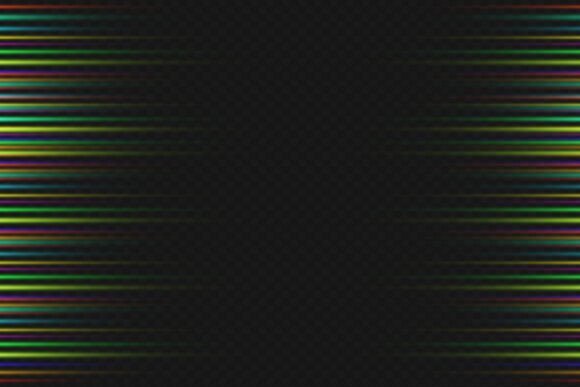
Motion Background: The Photoshop File for Dynamic Design
There is a specific kind of creative frustration that hits when you are staring at a static design, trying to explain movement to a client who needs to visualize the final product. You can talk about energy and flow all day, but if the asset is flat, the concept often falls flat with it. This is where the utility of a Motion Background steps in, not just as a visual flair, but as a foundational design asset that bridges the gap between static imagery and video production. When you are working with a fully editable Photoshop file, you are essentially holding the blueprint for kinetic energy in your hands.
Visual Characteristics and the "Realistic" Appeal
When we talk about a realistic Motion Background, we aren't just talking about a blurry gradient. We are discussing a specific aesthetic that mimics the behavior of light, fluid, and energy in the real world. The visual personality of these backgrounds is defined by depth, texture, and a sense of continuous flow. Unlike a standard static stock photo, a high-quality motion file contains layers of information—perhaps shifting nebula clouds, liquid metal ripples, or abstract geometric pulses.
The "realistic" aspect comes down to how the light interacts with the subject matter. In a premium file, you will notice that shadows aren't just black overlays; they are nuanced and shift as the background animates. This creates a three-dimensional feel on a two-dimensional screen. For a designer, this is crucial. It allows you to create a sense of immersion. Whether you are designing for a tech startup, a music festival, or a high-end product launch, the Motion Background provides a living, breathing canvas that static images simply cannot replicate.
Strategic Applications Across Industries
The versatility of a Motion Background makes it a heavy hitter across various sectors. It is not limited to video editors; in fact, its usage in static web design and social media graphics is exploding.
- Brand Identity and Logo Design: Modern brands are moving away from static logos. Using a Motion Background behind or within a logo animation adds a layer of sophistication. It signals to the audience that the brand is forward-thinking and dynamic. For entrepreneurs, this is a way to stand out in a crowded market without a massive budget.
- Editorial and Publishing: If you are a blogger or publisher, embedding a subtle motion background in a header image can drastically reduce bounce rates. It captures attention immediately. It works exceptionally well for "hero" sections on landing pages where you need to make an immediate impact.
- Packaging and Mockups: For designers presenting work to clients, placing a static packaging design onto a realistic motion background helps the client visualize the product in a retail environment. It adds context and atmosphere that a white background cannot provide.
- Video Content Creation: This is the most obvious application. Content creators on YouTube or TikTok use these files to create engaging intros, lower thirds, and full-screen backdrops for text overlays. It ensures the video looks professional even if the foreground content is just a talking head.
Small business owners often find this particularly useful for paid advertising. A static ad can easily be scrolled past, but a Motion Background catches the eye in the feed, increasing dwell time and click-through rates. It is a practical tool for conversion optimization.
Design Psychology and Audience Engagement
Visual hierarchy is the silent guide of design, and movement is its loudest voice. When you introduce a Motion Background into your composition, you are manipulating where the viewer looks first. Human eyes are hardwired to detect motion. By using a background that moves, you create a focal point that naturally draws the eye, allowing you to place your main message—be it a headline or a call to action—in a position of high visibility.
However, the influence goes deeper than just attention. It impacts brand perception. A chaotic, fast-moving background might convey excitement or urgency (great for a sale or a concert), while a slow, fluid motion conveys calm and stability (ideal for wellness brands or financial services). The choice of Motion Background is a strategic decision in brand identity. It tells the audience how to feel about the product before they even read the text.
Consistency is another key factor. When you use a consistent style of motion across your social media graphics, website, and video content, you build recognition. The audience starts to associate that specific visual texture with your brand. It creates a cohesive ecosystem that feels professional and trustworthy.
Technical Mastery: The Photoshop Advantage
The specific mention of a "Photoshop File" is not just a technical detail; it is a workflow game-changer. Many stock motion backgrounds come as pre-rendered video files (MP4 or MOV). While these are useful, they are rigid. You cannot change the color of a specific element or remove a layer that doesn't fit your composition.
A fully editable Photoshop file, often utilizing the Timeline feature, gives you granular control. You can adjust the hue and saturation to match a specific brand color palette. You can toggle layers on and off. If a specific particle effect is too distracting, you can turn it down or remove it entirely. This level of customization is what separates amateur designs from professional design assets. It allows for true integration with your font pairing choices. For instance, if you are using a bold display font, you might want to darken a specific area of the background to ensure the text pops. With a PSD file, you can do this non-destructively.
Practical Guidance for Selection and Integration
Choosing the right file requires a critical eye. You aren't just buying a file; you are investing in a component of your modern typography and visual strategy.
- Evaluate the Loop: A good Motion Background should loop seamlessly. If you are using it for a video that needs to run for 30 seconds, you don't want a jarring jump cut in the middle. Always preview the loop points before purchasing or downloading.
- Check the Color Palette: Look for files that have a neutral or easily adjustable color scheme. If the background is too specific (e.g., bright neon pink), it limits your usage. A premium file will often use smart objects or adjustment layers to make color shifting easy.
- Readability is King: Never let the background overshadow the message. If the motion is too fast or the colors too bright, your text will get lost. The background should support the hierarchy, not destroy it. This is where readability considerations come into play. You may need to add a semi-transparent overlay or a vignette to ground your typography.
- Licensing: Always verify the commercial font and asset licensing. If you are using this for a client's commercial project, you need to ensure the license covers that usage. "Free for personal use" does not apply to a business website or a paid ad campaign.
Pairing with Typography
The relationship between a Motion Background and your typography is symbiotic. If you have a chaotic, high-energy background, pairing it with a delicate, thin serif font might result in illegibility. Conversely, a subtle, slow-moving background pairs beautifully with intricate script fonts or handwritten fonts, adding elegance without visual competition.
For tech or corporate projects, a clean sans serif font placed over a geometric motion background creates a sleek, futuristic look. The key is contrast in movement. If the background moves fast, your text needs to be static and bold. If the background is slow and hypnotic, your text can be more expressive. This balance ensures that your logo design or marketing copy remains the hero of the composition.
Ultimately, a Motion Background is more than just decoration. It is a functional tool for storytelling. By leveraging the editability of a Photoshop file, you gain the power to tailor that story precisely to your audience's expectations, ensuring your brand looks as dynamic as the ideas you are trying to sell.